Graduate Students
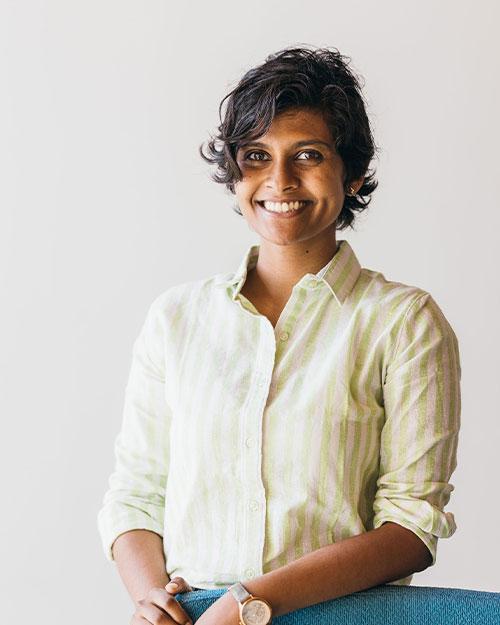
Vanalata Bulusu
Advisor: Stephanie Badde, PhD
Area of study: Multisensory Integration
Background: Vanalata graduated with a dual degree in Humanities and Computer Science.
Current research: I am interested in figuring out how the brain integrates information coming from multiple senses.
Future plans: Continue to contribute to knowledge.

Cierra Duncan
Advisor: Nathan Ward, PhD
Area of Study: Psychology, Cognitive Science, Human-Computer Interaction
Background: Cierra graduated from Drexel University with a BS in psychology in 2025. After graduating, she joined the Ayaz Neuroergonomics Lab, where she contributed to research that utilized functional near-infrared spectroscopy (fNIRS) to examine attentional control in individuals with late-stage ALS. There, she learned how neuropsychological assessments and brain–computer interfaces (BCIs) can translate into life-improving solutions for this population.
Current research: As an incoming student, Cierra is broadly interested in exploring cognitive function in clinical and healthy populations through the use of neuroimaging techniques and human-computer interfaces.
Future plans: Cierra hopes to contribute to research and development for systems and technologies used in both clinical and everyday settings.
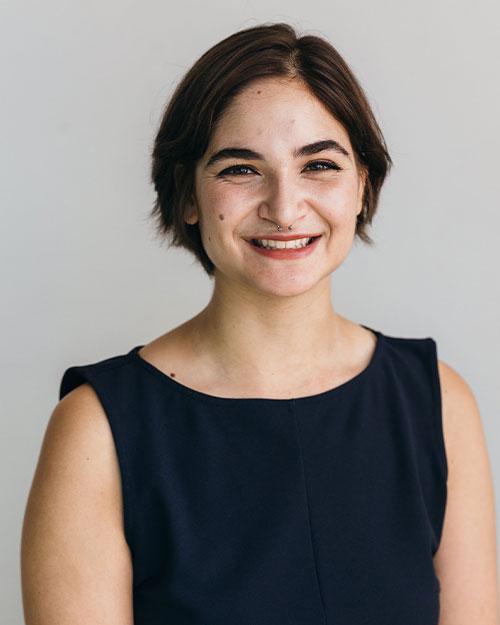
Crista Falk
Advisor: Stephanie Badde, PhD
Area of study: Cognitive Science
Background: Crista Falk graduated with a BS in Computation and Cognition and a minor in Music from the Massachusetts Institute of Technology in 2023. During this time, she spent 2 years in a Brain and Cognitive Sciences lab studying computational modeling of infant locomotion. She has previously worked as a software engineering intern and a machine learning researcher at Karlsruhe Institute of Technology.
Current research: Multisensory perception, computational modeling, the effects of cross-modal perturbation of somatosensation, proprioception, and audition.
Future plans: Crista would like to continue working in the perceptual space, either within academia as a professor or within tech working to improve accessibility through human computer interfaces.

Anna Garbier
Advisor: JP de Ruiter, PhD
Area of study: Cognitive Science
Background: Before joining Tufts, Anna built language technologies at Google, and created interactive digital experiences for architectural spaces throughout Boston and Cambridge. She has a BA in linguistics from Stanford.
Current research: Anna is interested in how people establish mutual understanding in conversation, and what happens when it breaks down. She plans to combine conversation analysis and computational methods to study conversational repair and related cognitive processes.

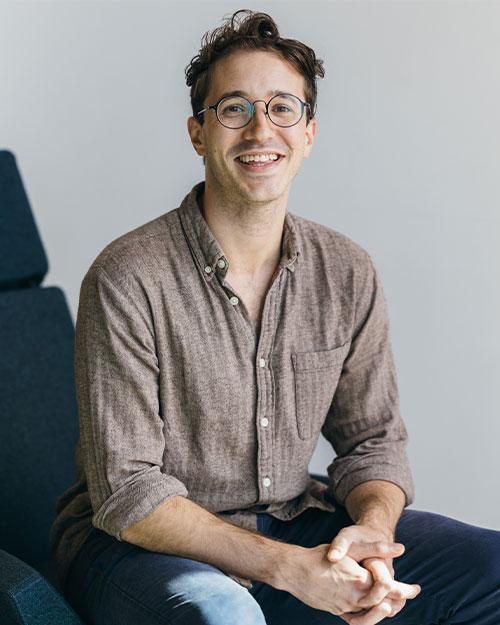
Thomas Allen Hansen
Advisor: Gina Kuperberg MD, PhD
Area of study: Cognitive science and Psycholinguistics
Background: Thomas received a BA in Psychology from the University of South Carolina. Here he gained experience as a research assistant in the Early Social Development and Intervention Lab with Dr. Jessica Bradshaw, working on early biomarkers for Autism Spectrum Disorder (ASD). He then received his MA in Psychology at Brandeis University. His research with Dr. Arthur Wingfield in the Memory & Cognition Lab investigated Cochlear Implant users’ ability to comprehend discourse-level texts using pupillometry.
Current research: Neural imaging of language processing (EEG, MEG), naturalistic language processing, discourse comprehension, predictive processing
Future plans: Learning more about MEG and fMRI, mentoring undergraduates/teaching, sleeping, publishing more papers
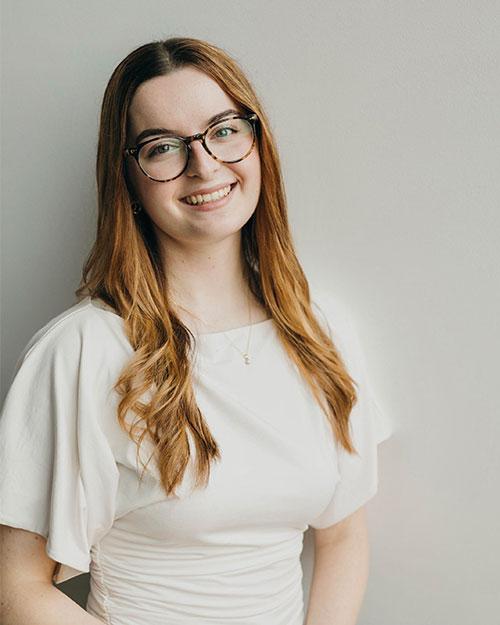
Katherine Hedman
Pronouns: she/her/hers
Advisor: Elizabeth Race, PhD
Area of study: Cognitive Neuroscience
Background: Katie received her BS in Neuroscience with minors in Biology and Psychology from the University of Oregon in 2024. During her undergraduate studies, she worked in multiple different labs studying human perception, cognitive dynamics, and memory processes. After graduating, she worked at UO full-time as the lab manager in Dr. Brice Kuhl’s Memory and Attention Lab, focusing on memory repulsion and fMRI research.
Current research: Katie is broadly interested in studying how aphantasia, the absence of mental imagery, impacts different memory processes. She is currently working on investigating how mental imagery may influence the misinformation effect.
Future plans: Continue to study the misinformation effect, broaden the field of mental imagery research, and utilize neuroimaging methods, such as fMRI and EEG.

Linnea Hultman
Advisor: JP de Ruiter, PhD
Current research: Artificial Intelligence, Natural Language Processing

Sreelakshmi K
Advisor: Dr. Stephanie Badde
Area of study: Cognitive Science
Background: Sreelakshmi completed her BSc in Physics with a minor in Mathematics from the University of Delhi. She then pursued an MSc in Cognitive Science from the Indian Institute of Technology Gandhinagar, where she began her research on vibrotactile perception in the Touch Perception lab. Following her master’s, she continued in the lab as a project assistant, working on categorical learning in vibration perception.
Current research: Multisensory perception and neuroplasticity
Future plans: Continue research on perception and neuroplasticity

Ashlynn Keller
Advisor: Holly A. Taylor, PhD
Area of study: Spatial Cognition, Navigation, Cognition
Background: Ashlynn graduated with a B.S. in Psychology and Biomedical Sciences from Rochester Institute of Technology. As an undergraduate, she examined differences between children, orangutans, and raccoons in a problem-solving task. Additionally, she studied object and numerosity discrimination in goldfish while serving as the lab manager of the Comparative Cognition and Perception Lab. At Tufts, Ashlynn has studied cognition in adults, pigeons, starlings, and zebra finches. She completed her M.S. in Experimental Psychology from Tufts University in 2018 in a thesis titled "Auditory object perception in pigeons (Columba livia)."
Current research: Her current research examines what information people seek when they face uncertainty while navigating an environment.
Future plans: Continue learning new skills and become a better scientist and educator.
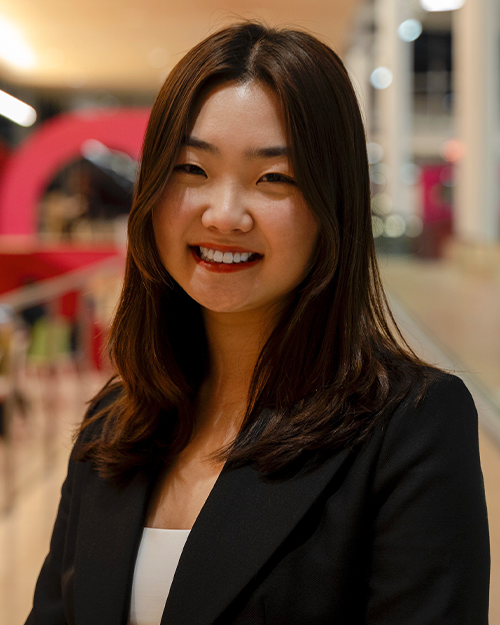
Anes Kim
Advisor: Robert Jacob, PhD
Area of study: Human-Computer Interaction, Brain-Computer Interfaces, and Cognitive Science
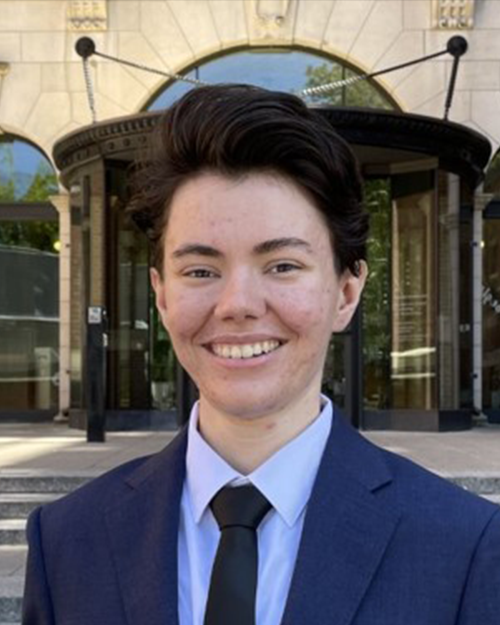
G. R. Marvez
Advisor: Greses Pérez, McDonnell Family Assistant Professor
Area of study: Joint Doctoral Student in STEM Education and Cognitive Science
Background: Marvez is a PhD student in the joint STEM Education and Cognitive Sciences program at Tufts University interested in games, language, and controversial discussions. At MIT, Marvez worked in the Teaching Systems Lab with Dr. Justin Reich and Dr. Joshua Littenberg-Tobias on the development of virtual simulations for teachers to practice leading controversial discussions. They are interested in ways to prepare teachers to facilitate controversial debates with students in STEM classrooms, such as through simulations and games, on topics such as genetic modification, climate change, and public infrastructure. Marvez has also worked on the development of natural language processing models for assessment and personalized feedback in educational settings.

Luna Malloy
Advisor: Xandra Kredlow, PhD
Area of study: Psychology and Cognitive Science
Background: Luna graduated from the University of Texas at Austin with a degree in Psychology and a minor in Anthropology. In the four years that followed, she worked as a research assistant in neuroimaging labs at the University of Pittsburgh and UT Austin. Her research background has largely focused on neurocognitive correlates of clinically relevant topics like suicidality, trauma exposure, and various anxiety disorders.
Current research: Luna wants to help advance our understanding of anxiety-related disorders by researching how fear impacts learning and memory processes.
Future plans: Improve her research skills, and learn how to teach in a way that gets other people excited about cognitive science!
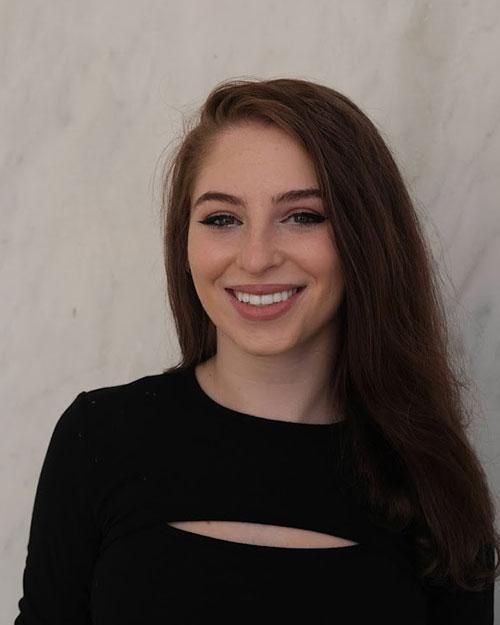
Sydni Nadler
Pronouns: she/her
Advisor: Holly Taylor, PhD and Nathan Ward, PhD
Area of study: Applied Cognitive Science
Background: Sydni graduated from the George Washington University Honors Program with a BA in Psychological & Brain Sciences and Criminal Justice in 2022. As an undergraduate, she was named a Luther Rice Research Fellow and was awarded the Sigelman Undergraduate Research Enhancement Award for her work with the GW Visual Cognition Lab under Dr. Stephen Mitroff. Sydni’s honors thesis investigated the differences in participant visual search performance, self-reported individual differences, and study compliance pre- and peri-COVID-19. Following graduation, Sydni served as a Junior Lecturer in the Department of Psychological & Brain Sciences at Johns Hopkins University.
Current research: Sydni is broadly interested in the intersection of attention, spatial cognition, and individual differences. She has also been studying Cognitive Enhancement and Neuromodulation in collaboration with the Center for Applied Brain and Cognitive Sciences.
Future plans: Conducting research on the intersection between emerging technology and cognitive psychology, reading more (for academic reasons and otherwise), and finding the best strawberry matcha in Boston.

Megan Paterson
Advisor: Xandra Kredlow, PhD
Area of study: Psychology and Cognitive Science
Background: Megan graduated from Fairfield University with a degree in Psychology with a concentration on Behavioral Neuroscience. During her time there, she conducted behavioral research on awareness of implicit biases toward individuals with mental health disorders. Following graduation, she served as a Postgraduate Research Associate at Yale University, where she researched the effect of anxiety on decision-making. She also investigated differences in brain activity among individuals with different symptoms of PTSD using functional magnetic resonance imaging (fMRI) and magnetoencephalography (MEG).
Current research: Translational research on anxiety-related disorders, and understanding cognition, particularly memory, using fMRI.
Future plans: Continue learning and contributing to cognitive research on memory and its translational effects on mental health while mentoring students and fellow researchers.

Max Ramseyer
Advisor: Ayanna Thomas, PhD
Area of study: Cognitive Science
Background: Max Ramseyer earned an MEd from Harvard University, an MTS from Holy Cross Greek Orthodox School of Theology, and a Self-Designed BA from Duke University, with training across psychology, neuroscience, education, and theology. As a neuro-imaging research assistant at Mass General Brigham, his research examined how sense of purpose in life is associated with greater cognitive resilience in the preclinical stage of Alzheimer’s disease and how hedonic and eudaimonic wellbeing are differentially mapped onto the default-mode network. He also serves as an instructor of neuropsychology and statistics at Hellenic College and as a Teaching Fellow for Adult Development & the Immunity to Change courses at the Harvard Graduate School of Education.
Current research: At Tufts, Max is interested in the neurobiological substrates of metacognitive and autobiographical memory processes and their link to navigating uncertainty during adult developmental transformations.
Future plans: Continue to study how our mind and brain interact when our capacity to make meaning of our life experiences undergoes deep transformation.
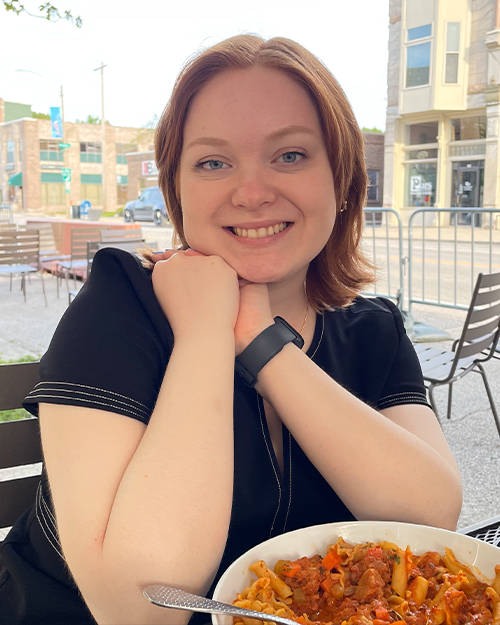
Anna Sheaffer
Advisor: Robert Jacob, PhD
Area of study: Human-Computer Interaction, Brain-Computer Interfaces

Nicole Toumanios
Advisor: Eileen Crehan, PhD
Area of study: Child Study and Human Development
Current research: I will be pursuing a joint doctoral degree in Human Development and Cognitive Science under the mentorship of Dr. Eileen Crehan. We share an interest in integrating underrepresented populations and voices in autism research.
My research has focused on the physiological, behavioral, and cognitive basis of neurodevelopmental disorders like autism spectrum disorder and dyslexia. I am fascinated in the assessment and intervention tools used to mediate social skills, academic achievement, and neurodevelopment.

Apoorva Vallampati
Advisor: Gina Kuperberg, PhD
Area of study: Cognitive neuroscience, linguistics, psychiatric disorders
Background: Apoorva earned her BS in Neuroscience from The Ohio State University in 2020. Her undergraduate thesis work at The Cognitive Development Lab (PI: Dr. Vladimir Sloutsky) proposed that new words could be added to the semantic network by mere exposure to two fundamental statistical regularities that naturally occur in language, and that this sensitivity only increases with age. After leaving school, Apoorva pursued an analytics career in the banking industry, applying her understanding of cognition and semantic networks to help build AI/ML and behavioral analysis tools to detect fraud.
Current research: Investigating how neurolinguistic processing changes in psychiatric disorders using an integrative approach that combines brain imaging techniques, predictable neural measures associated with semantic context, and large language models.
Future plans: Research, writing, & teaching